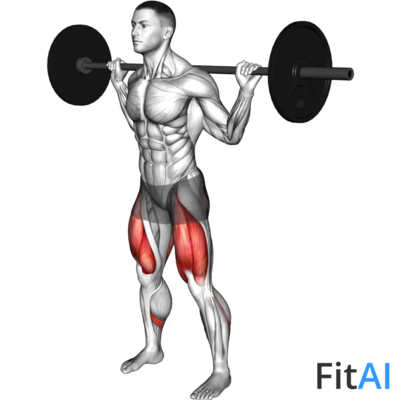
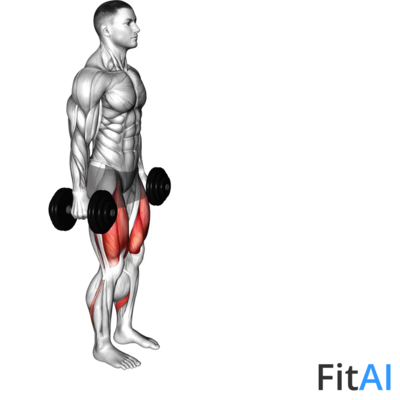
Standing Hip Extension
Intermediate
Also known as: Standing Bodyweight Hip Extension
Expert Advice
A small backward movement is enough. If your lower back arches, reduce the range so the movement comes from your hip.
How-to-do Steps
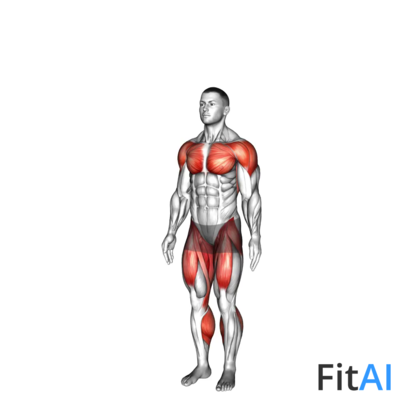
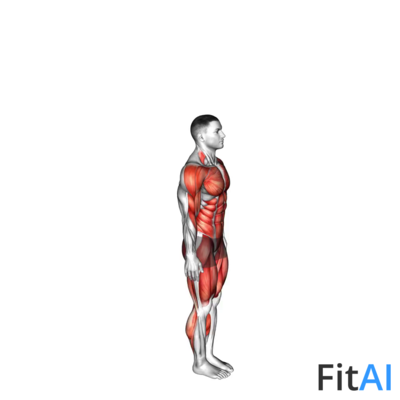
- Stand upright with feet hip-width apart and arms relaxed by your sides.
- Shift your weight onto one leg, keeping its knee slightly bent.
- Move the other leg backward from your hip, keeping that knee nearly straight.
- Stop before your torso leans forward or your pelvis rotates.
- Bring your working foot back beside your supporting foot with control.
- Complete all repetitions on this side, then switch legs and repeat.
Common Mistakes
- Leg swings backwardFix: slow down so momentum does not lift your foot.
- Working foot turns outwardFix: keep your toes pointing forward as your leg moves back.
Coach Cues
Stand tallKeep hips facing forwardReach back, not up
Short reminders to keep in mind during every set.
Track Standing Hip Extension in FitAI
Log your sets, reps, and weights automatically. Get AI-powered progressive overload recommendations and form feedback — personalized to your training history.
Muscles Worked
Standing Hip Extension primarily targets the Glutes, Hamstrings, with Stretching mechanics using Body Weight. Understanding muscle activation patterns helps you focus on proper engagement and maximize training effectiveness.
Primary
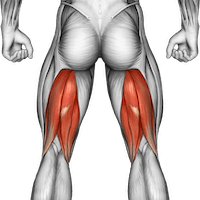
Glutes65%
Hamstrings35%
Equipment Body Weight
Exercise Type
Stretching
Why Level 3?
Intermediate
Unsupported single-leg balance is the main challenge while the opposite leg moves.
Technique
Stability
Strength
Mobility
Impact
Learning
Sets & Reps Guidance
Beginner3 x 12-15
Intermediate3 x 15-20
Advanced4 x 15-20
Variations
Easier Variation
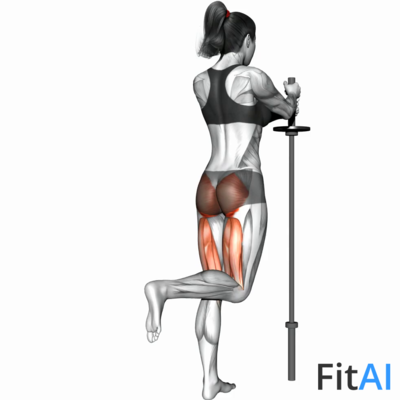
Harder Variation
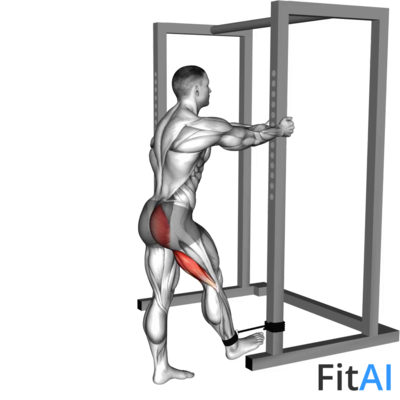
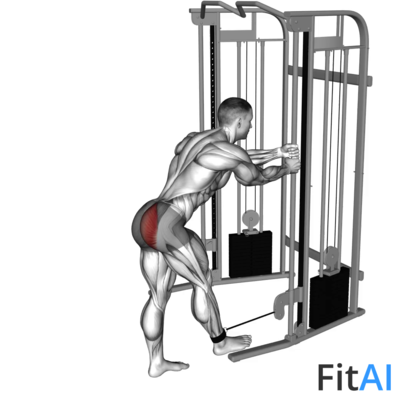
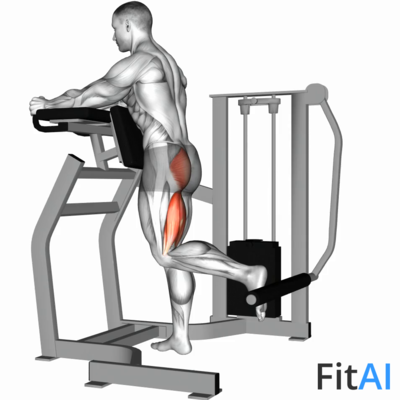
Frequently Asked Questions
What muscles does Standing Hip Extension work?
Standing Hip Extension primarily targets the Glutes, Hamstrings. It is classified as a Stretching exercise performed with Body Weight.
How many sets and reps should I do for Standing Hip Extension?
For beginners, start with 3 sets of 12-15. Intermediate lifters can do 3 sets of 15-20. Advanced athletes can push to 4 sets of 15-20. Adjust based on your goals and recovery capacity.
Is Standing Hip Extension suitable for beginners?
Standing Hip Extension is rated as intermediate difficulty. Beginners may want to start with lighter loads or simpler variations and progress to this exercise as their strength and coordination improve.
What are the most common mistakes when doing Standing Hip Extension?
Leg swings backward: slow down so momentum does not lift your foot. Working foot turns outward: keep your toes pointing forward as your leg moves back.