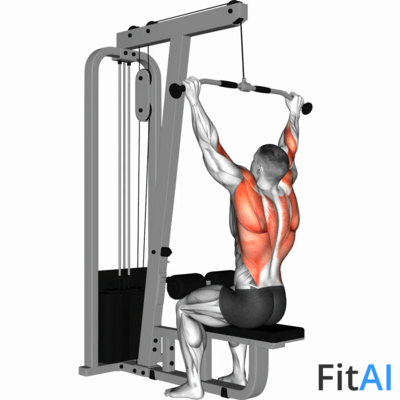
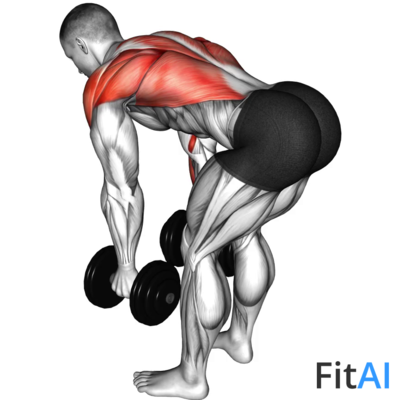
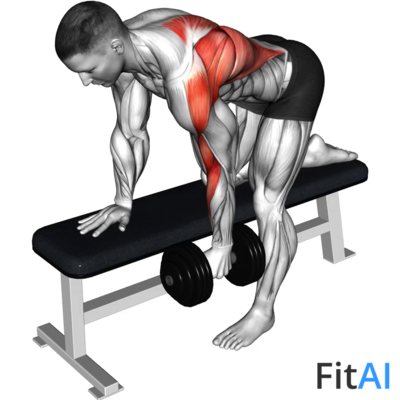
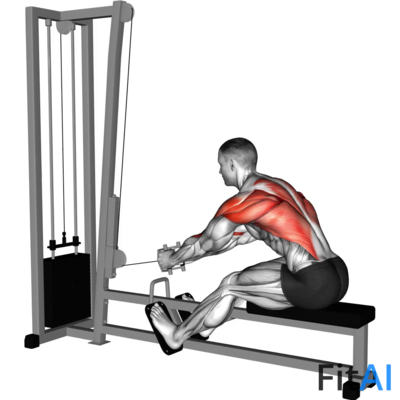
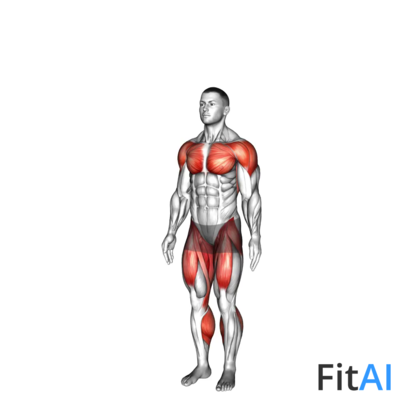
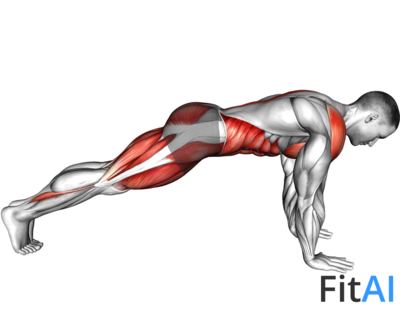
Assisted Pull-up
Expert Advice
Focus on pulling with your lats and avoid using momentum to get the most from the exercise.
How-to-do Steps
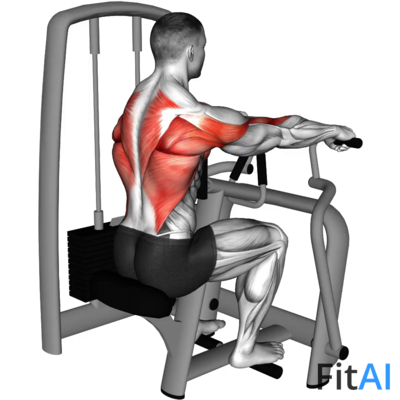
- Kneel on the assistance pad and grasp the pull-up bar with a wide grip.
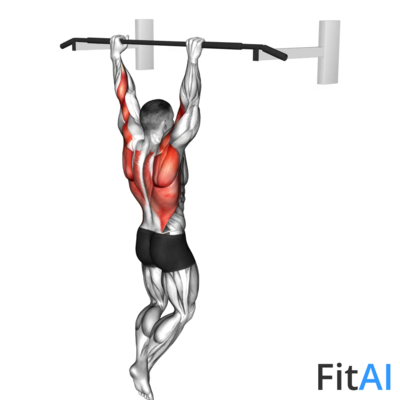
- Pull your body up until your elbows are at 90 degrees or your chin is above the bar.
- Lower yourself back down slowly to the starting position.
Track Assisted Pull-up in FitAI
Log your sets, reps, and weights automatically. Get AI-powered progressive overload recommendations and form feedback — personalized to your training history.
Muscles Worked
Assisted Pull-up primarily targets the Lats, with Strength mechanics using Leverage Machine. Understanding muscle activation patterns helps you focus on proper engagement and maximize training effectiveness.
Primary
Lats50%
Secondary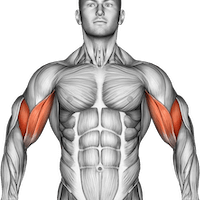


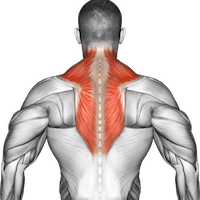
Biceps20%
Forearms10%
Shoulders10%
Traps10%
Equipment Leverage Machine
Exercise Type
Strength
Sets & Reps Guidance
Beginner3 x 10-12
Intermediate4 x 8-10
Advanced4 x 6-8
Frequently Asked Questions
What does Assisted Pull-up work?
This exercise directly targets your lats, with secondary activation in your biceps, forearms, shoulders, and traps. It is one of the most popular lats exercises in the gym and uses a leverage machine.
What is the most common mistake with Assisted Pull-up?
The biggest mistake is pulling with your arms instead of initiating the movement from your back. Slow down, focus on feeling the lats work through the full range of motion, and use a weight or difficulty level you can actually control.
How many sets and reps should I do for Assisted Pull-up?
Start with 3 sets of 10 to 15 reps. If the exercise works one side at a time, do 10 to 15 reps per side. Rest 30 to 60 seconds between sets. Pick a weight that makes the last 2 to 3 reps feel challenging but doable with good form. Track your sets in the FitAI app to make sure you are progressing over time.
What can I do instead of Assisted Pull-up if I don't have a leverage machine?
You can substitute dumbbells or a resistance band to mimic the same movement pattern and still target your lats effectively. The key is keeping the same movement pattern and range of motion. The resistance source matters less than how you control the movement.