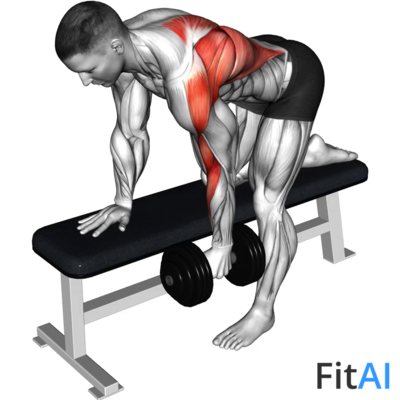
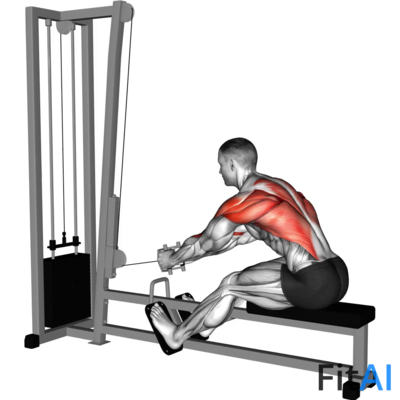
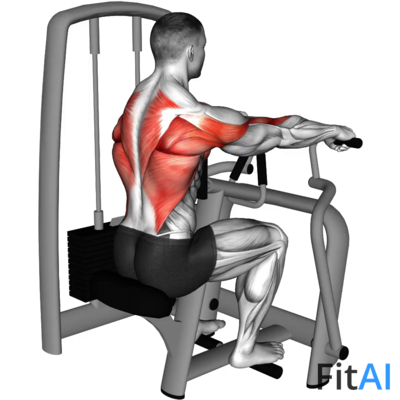
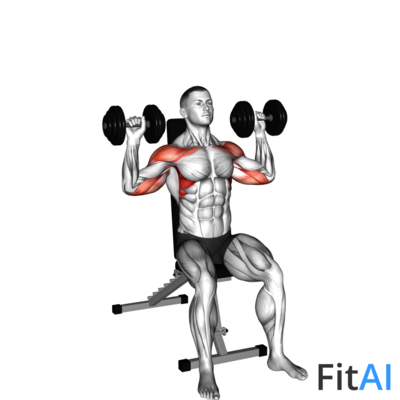
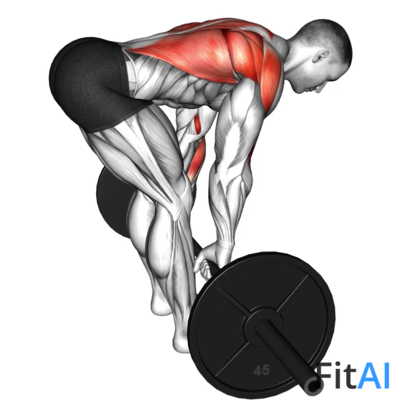
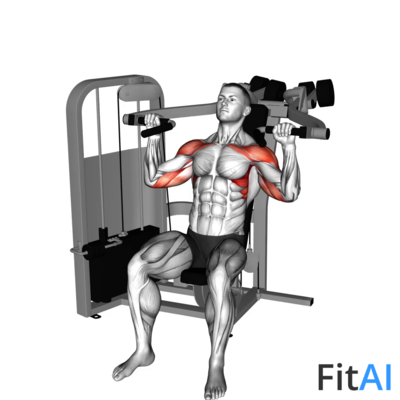
Dumbbell Rear Lateral Raise
Expert Advice
Keep your core engaged and avoid using momentum to lift the weights; control is key for targeting the shoulder muscles effectively.
How-to-do Steps
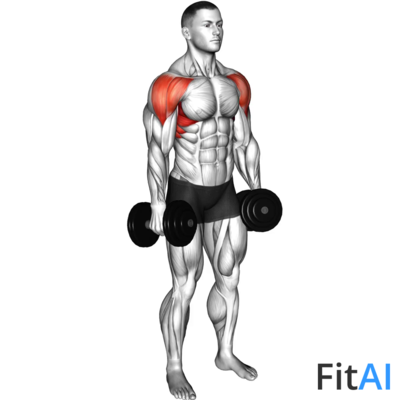
- Stand with feet shoulder-width apart, holding a dumbbell in each hand at your sides.
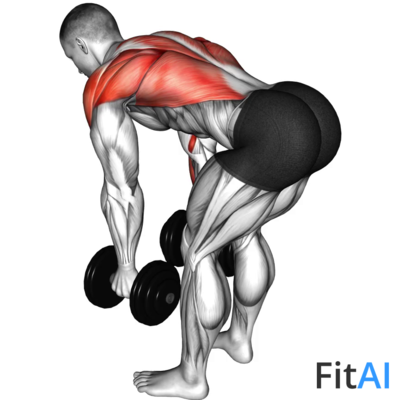
- Slightly bend your knees and hinge forward at the hips, keeping your back straight.
- With a slight bend in your elbows, raise the dumbbells straight out to your sides until they are in line with your shoulders.
- Pause at the top of the movement, then slowly lower the weights back to the starting position.
- Repeat for the desired number of repetitions.
Track Dumbbell Rear Lateral Raise in FitAI
Log your sets, reps, and weights automatically. Get AI-powered progressive overload recommendations and form feedback — personalized to your training history.
Muscles Worked
Dumbbell Rear Lateral Raise primarily targets the Shoulders, with Strength mechanics using Dumbbell. Understanding muscle activation patterns helps you focus on proper engagement and maximize training effectiveness.
Primary
Shoulders70%
Secondary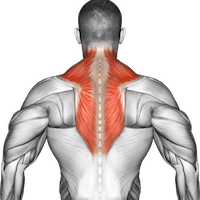
Traps30%
Equipment Dumbbell
Exercise Type
Strength
Sets & Reps Guidance
Beginner3 x 12-15
Intermediate3 x 10-12
Advanced4 x 8-10
Frequently Asked Questions
What does Dumbbell Rear Lateral Raise work?
This exercise directly targets your shoulders, with secondary activation in your traps. It is one of the most popular shoulders exercises in the gym and uses a dumbbell.
Is Dumbbell Rear Lateral Raise good for beginners?
Yes. Dumbbell Rear Lateral Raise uses a simple movement pattern that does not require advanced coordination. You just need a dumbbell to get started. Focus on controlled reps and good form before worrying about speed or volume.
How many sets and reps should I do for Dumbbell Rear Lateral Raise?
Start with 3 sets of 10 to 15 reps. If the exercise works one side at a time, do 10 to 15 reps per side. Rest 30 to 60 seconds between sets. Pick a weight that makes the last 2 to 3 reps feel challenging but doable with good form. Track your sets in the FitAI app to make sure you are progressing over time.